Meet the International Panel of the EWB National Conference 2026

How can intelligent technologies help English language teachers teach more effectively, engage learners, and prepare for the future?
This question will be at the heart of one of the key discussions at the 6th EWB National Conference 2026, taking place on October 23–24 at Hyatt Regency Dushanbe, Tajikistan.
Under the theme “American Super Intelligence in English Language Teaching: Innovative Techniques, Technological Tools and Future Possibilities,” the international panel discussion will explore how emerging intelligent technologies and educational tools can be applied meaningfully in English language teaching. The focus will be on practical possibilities for educators: strengthening teaching methodologies, supporting professional development, and creating more engaging and effective learning experiences.
Rather than focusing on technology for its own sake, the discussion will consider how teachers can make informed choices about technological tools while keeping sound pedagogy, learner needs, and human connection at the center of education.
Five Experts, Diverse Perspectives
The panel brings together experienced educators, researchers, teacher trainers, and education leaders from different professional backgrounds. Their combined expertise will offer a broad perspective on the opportunities and challenges shaping English language teaching today.
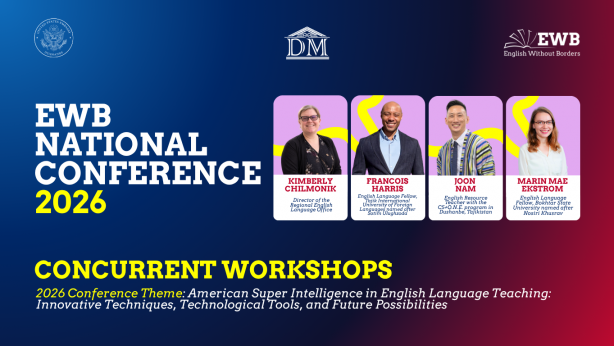
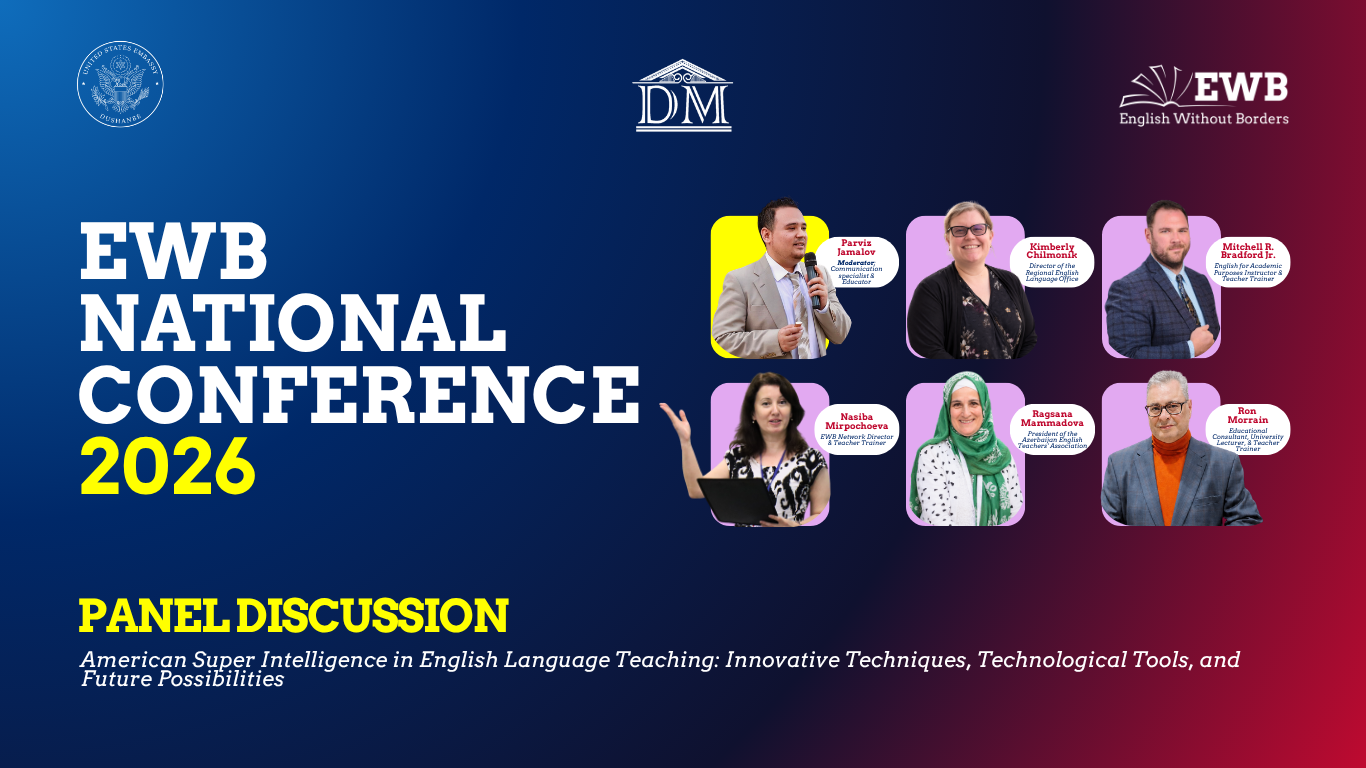
Kimberly Chilmonik
Director of the Regional English Language Office
Kimberly Chilmonik leads programs that support English language teaching and learning across five Central Asian countries. With more than 15 years of experience in TESOL and teacher training, she brings extensive regional and international expertise in educational programming and English language education.
Her regional perspective will contribute to discussions about how new approaches and technologies can support English language teaching within diverse educational contexts.
Mitchell R. Bradford Jr.
EAP Instructor, Teacher Trainer, and Doctoral Researcher
Based at Ocean University of China, Mitchell R. Bradford Jr. teaches English for Academic Purposes and supports teacher development. He is also pursuing doctoral studies in TESOL at the University of St Andrews, focusing on the challenges English teachers face in Asia and the strategies they use to navigate them.
His research interests include academic English, artificial intelligence, virtual education, and intercultural communication. His experience offers a valuable perspective on the relationship between emerging technologies, classroom practice, and teacher development.
Nasiba Mirpochoeva
Director of the English Without Borders Network
Nasiba Mirpochoeva has led the English Without Borders Network since 2021, helping connect English language educators and students across Tajikistan through professional development, networking, and pedagogical resources.
With extensive experience in educational leadership and international development, she brings a community-centered perspective to the conversation. Her work highlights the importance of ensuring that innovation supports not only individual teachers but also stronger professional communities and more opportunities for collaboration.
Ragsana Mammadova
Founder and President of the Azerbaijan English Teachers’ Association
Ragsana Mammadova is an experienced education leader whose career spans teacher development, school leadership, educational management, and international cooperation. Through her leadership of the Azerbaijan English Teachers’ Association (AzETA), she has supported professional networking and development opportunities for English language educators.
Her experience provides an important perspective on how educational innovation can be supported through teacher associations, leadership, and sustained professional learning.
Ron Morrain
International Educational Consultant, University Lecturer, and Teacher Trainer
With more than 40 years of international experience across over 25 countries, Ron Morrain has worked extensively in teacher education and innovative language teaching. He developed Ready-made Mind Maps, an approach that combines task-based, project-based, content-integrated, and inquiry-based learning, with later additions including mobile learning, AI, and alternative assessment.
Through his teacher-training activities and international educator communities, Ron has helped teachers explore practical approaches to classroom instruction and professional development.
From Technological Possibilities to Classroom Practice
As intelligent technologies continue to create new possibilities for education, English language teachers face an important question: How can these tools improve teaching and learning in real classrooms?
The panel discussion will provide an opportunity to consider this question from different perspectives, connecting technological possibilities with teaching methodology, teacher capacity, and professional collaboration.
Key areas of reflection will include how educators can explore innovative teaching techniques, make thoughtful use of technological tools, and identify future opportunities for English language teaching. Equally important is recognizing that technology alone does not guarantee better learning. Effective implementation depends on teachers’ professional judgment, appropriate methodology, and a clear understanding of learners’ needs.
These questions are particularly relevant to educators in Tajikistan and across Central Asia, where professional networks and access to practical teaching resources can play an important role in supporting continued development.
Looking Ahead: Innovation Through Collaboration
The EWB National Conference brings educators together to exchange ideas, share experiences, and explore new approaches to English language teaching. This panel discussion will contribute to that mission by connecting international expertise with the professional priorities of the local teaching community.
By bringing together perspectives from regional educational programming, academic research, teacher associations, professional development, and innovative classroom practice, the discussion aims to encourage informed reflection and meaningful collaboration.
Ultimately, the future of English language teaching will depend not simply on which technologies become available, but on how effectively educators use them to support teaching, learning, and professional growth.